
Understanding Coercive Control: The Invisible Abuse
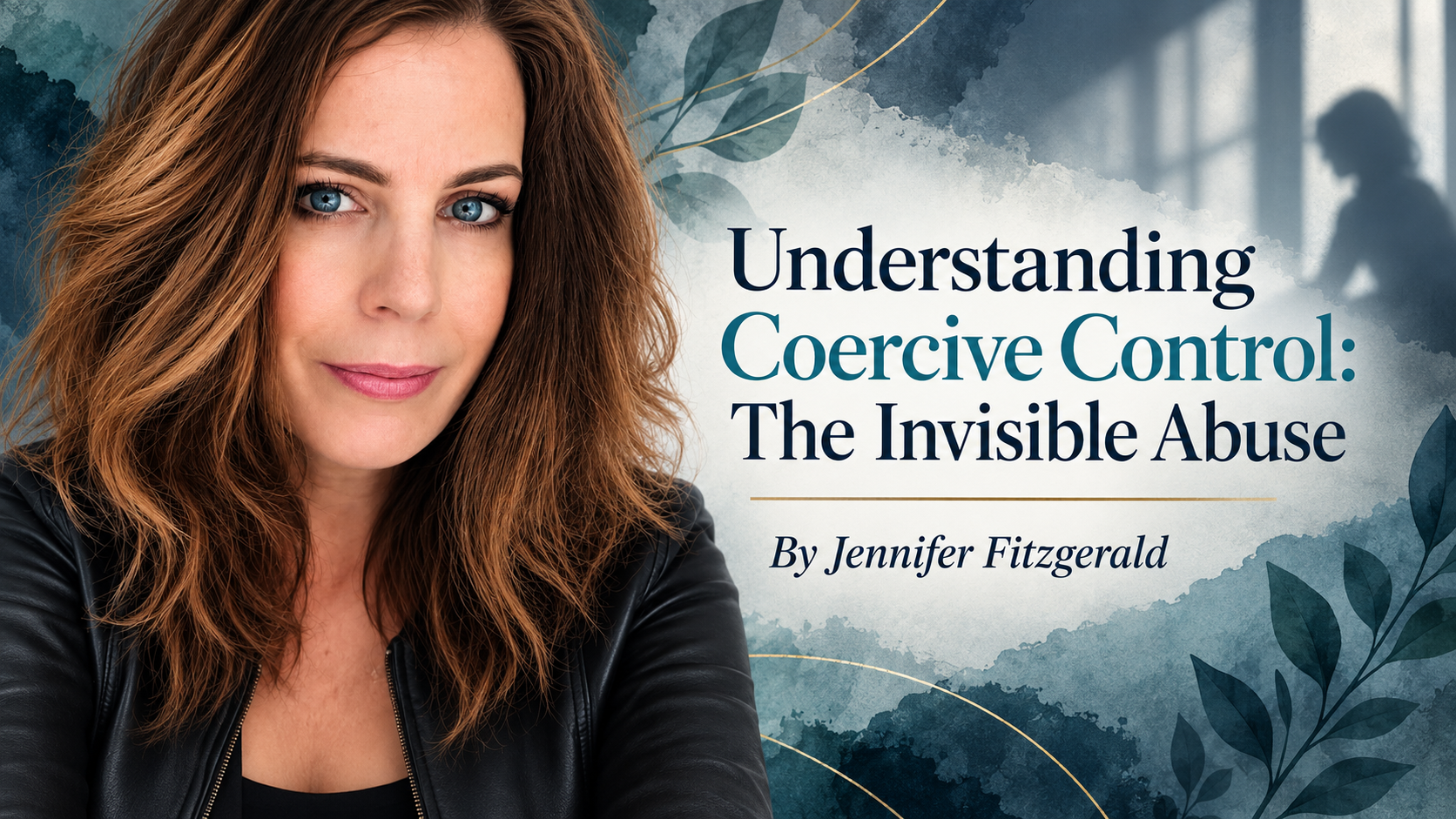
Jennifer Anderson Coaching & Empowerment
Trauma-Informed Mental Health Coach
Founder of Rebuilding After Domestic Violence Support Community for Women
Author and Writer
Quick Answer
Coercive control is a pattern of behavior designed to manipulate, isolate, intimidate, and dominate another person’s life. It can happen slowly over time, making it difficult to recognize while you are living in it. Common signs include isolation from family and friends, monitoring, punishment for noncompliance, fear of saying no, and the gradual loss of independence.
If your situation involves domestic violence, separation, divorce, custody, or protective order concerns in North Carolina, learning about your legal options can be an important part of moving forward.
Recognizing the Signs of Coercive Control
For years and years, I did not realize the dynamic that I was living in.
I simply thought my relationship was intense, passionate.
It snuck up on me insidiously over many years, small little pieces of my liberty taken away in tiny increments.
It began with controlling what I wore, not allowing me to wear certain things.
And then he didn’t like certain foods. I wasn’t allowed to cook them. It was presented as, “This is what I like,” and me wanting to please him, so I complied.
Before I knew it, I was not allowed to talk to my family because they were “not healthy for me,” and then it progressed to friends who were “not healthy for me.”
Little by little, over many years, my liberty and self were taken away.
This is the inside dynamic of coercive control.
The thing was, I did not realize what I was living in because it happened so slowly over a period of years that it became normal to me.
I never realized it was abuse until the very end.
By this time, it had become physically violent.
I was so beaten and broken down emotionally and psychologically that I was not in a healthy frame of mind.
This is what coercive control can do to you.
If you recognize yourself inside this dynamic, I want you to listen to that.
Your intuition is your greatest ally.
What Is Coercive Control?
Coercive control is a pattern designed to manipulate, control, and dominate someone’s life.
It may not always start with physical violence. In many situations, it begins quietly, through control, criticism, pressure, isolation, monitoring, and fear. Over time, the person experiencing it may begin changing their behavior to avoid consequences, anger, intimidation, or punishment.
That is part of what makes coercive control so confusing. It can happen slowly enough that the person living inside it begins to question whether it is really abuse.
But if your freedom, relationships, choices, and sense of self are being taken away little by little, that matters.
Common Coercive Control Dynamics
Here is a list of common coercive control dynamics:
- Isolation from friends and family
- Monitoring where you go, what you do, and who you talk to
- Making you afraid of the consequences of saying no
- Gradually taking away your independence
- Controlling what you wear, how you look, or how you present yourself
- Limiting your access to outside relationships or support
- Using anger, silence, intimidation, or fear to punish noncompliance
Recognizing Abuse
1. Are you being isolated?
Are you being cut off from family and friends and/or having your ability to have outside relationships limited?
2. Are you being monitored?
Is your phone monitored? Your email? Your texts? Are you questioned about who you talk to or where you go? Is there video surveillance in your home?
3. Are you made to feel that you need to wear certain things or wear your hair a certain way?
Are you outright forbidden from wearing certain clothing items?
4. Are you punished for noncompliance?
Are you met with the silent treatment, anger, or intimidation?
These are some of the signs of coercive control.
If this is something you are living in, I want to encourage you that what you are experiencing is real.
It may even seem normal to you.
Practical Takeaways
1. Trust your intuition.
If something doesn’t feel right, listen to that.
2. Look at the relationship as a whole. Identify patterns.
Coercive control is a pattern of behaviors that develops over time. One moment may be explained away. A pattern tells a deeper story.
3. Reach out to someone you trust.
This could be an advocate, pastor, friend, family member, coach, counselor, or another safe person in your life. The important thing is not to stay isolated with the fear and confusion.
4. Learn your options.
There are resources available. There are shelters, organizations such as InterAct, and coaching and advocacy services such as Jennifer Anderson Coaching & Empowerment. Learning what resources are available can help you understand what options you may have and what support may be available to you.
5. Put together a safety plan.
If you are living with coercive control or domestic violence, safety planning is important. A safety plan can help you think through where you could go, who you could contact, what documents or items may be important, and what steps may help you leave as safely as possible.
If you are in immediate danger, call 911.
I also want to encourage you that you do not have to live this way. It is possible to leave. It is possible to move forward and rebuild your life, even thrive.
You can break free from this.
Understanding Your Legal Options in North Carolina
If your situation involves domestic violence, divorce, child custody, separation, or other legal concerns, learning about your legal options can be an important part of moving forward.
For someone experiencing coercive control, legal questions may include:
- Whether a protective order may be available
- How domestic violence may affect separation or divorce
- How safety concerns may relate to child custody or parenting arrangements
- What steps may help protect children and family members
- How to prepare for a legal conversation without putting yourself at greater risk
Triangle Divorce Lawyers handles domestic violence and protective order matters as part of its North Carolina family law practice and serves clients across Raleigh, Cary, Clayton, Wake Forest, and surrounding Triangle communities.
To learn more about domestic violence and protective orders, visit Triangle Divorce Lawyers’ Domestic Violence & Protective Orders page.
You may also find these related resources helpful:
Child Custody in North Carolina
Schedule a Free 10-Minute Call
Contact Triangle Divorce Lawyers
Key Takeaway
Coercive control can be difficult to recognize because it often happens slowly. It may begin with small restrictions, criticism, monitoring, or isolation, then grow into a pattern that affects your freedom, relationships, confidence, and safety.
If you recognize yourself inside this dynamic, listen to that.
What you are experiencing is real.
Support is available.
You can rebuild your life after coercive control and domestic violence.
About the Author
Written by Jennifer Fitzgerald
Jennifer Anderson Coaching & Empowerment
Trauma-Informed Mental Health Coach
Founder of Rebuilding After Domestic Violence Support Community for Women
Author and Writer
Questions About Domestic Violence, Protective Orders, Divorce, or Custody in North Carolina?
If your situation involves domestic violence, coercive control, divorce, child custody, separation, or protective order concerns, Triangle Divorce Lawyers can help you understand your legal options.
Call 919-303-2020 or schedule a free 10-minute call to discuss a Case Review with Triangle Divorce Lawyers.
Contact Triangle Divorce Lawyers
Educational Disclaimer
This article is for general educational and informational purposes only and is not legal advice, mental health advice, or coaching advice. Every situation is different. Reading this article does not create an attorney-client relationship, therapist-client relationship, or coaching relationship. If you are in immediate danger, call 911. Consult an attorney about your specific legal circumstances.
Reviewed by Alice Womack, Managing Attorney at Triangle Divorce Lawyers, a North Carolina family law firm.
A free 10-minute call is the best way to get guidance specific to your circumstances.